
Under the Radar by R. Eugene Parta
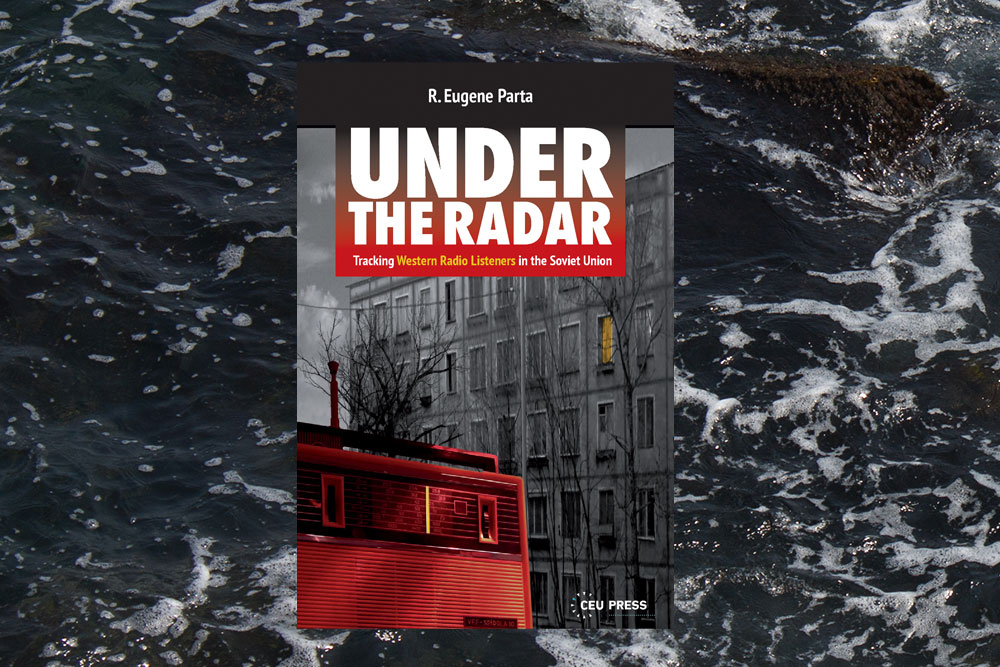
Under the Radar by R. Eugene Parta – Tracking Western Radio Listeners in the Soviet Union – was not what I was expecting, hence the 3 stars I awarded it. The blurb mentioned the Radio Free Europe/Radio Liberty broadcast role in ending the Cold War, something important now that russia attacked Ukraine. The book feels very much like a memoir though, as Parta was for many years the director of Soviet Area Audience Research and he talks about his colleagues and his travels. That might make the book more interesting for some readers, but I was looking for analysis within the historical context and not description. I will share 2 quotes, one about Romania bombing the headquarters of RFE/RL, and the second one of views on russians/soviets.
quote on Romania:
“The year started off literally with a bang. On Saturday, February 21, 1981, in the late evening, a group of international terrorists led by the Venezuelan-born Ilyich Ramirez Sanchez, better known as Carlos the Jackal, bombed RFE/RL headquarters in the Englischer Garten in Munich. Carlos was in the pay of the Romanian Securitate (secret police), carrying out orders from Romanian President Nicolae Ceauşescu, who had been angered by the Romanian service broadcasts. Carlos and his associates had reportedly been paid $1 million by the Romanians. The powerful bomb was estimated to consist of about 30 pounds (around 15 kilograms) of a Romanian-made explosive called nitropenta.
Four RFE/RL employees were seriously injured, and damage to the building exceeded $2 million. This was the only direct attack ever made on the RFE/RL headquarters building.”
another quote I found interesting:
“…the russian service was on the air twenty-four hours a day and provided much more extensive coverage of glasnost and perestroika. This might have accounted for the shift. The non-russian language services had much less air time and tended to focus on cultural and political events in their respective republics.”
This was written as an explanation for why the national minorities shifted towards listening to russian service instead of their own language. It offered more relevant topics. This mirrored the approach used by russian/soviet imperialists. The real and important information was in russian, while in their languages were bread recipes. In the end, of course, it appeared that people wanted to hear russian.
All the employees were either russian or westerners who studied russian at university. The soviet empire had a russian-centric view and this was what the west did in academia and at RFE/RL. The book ends with a “the russians need to be told the truth” and the war will end. Like everybody, I didn’t imagine that having 700k casualties (dead and injured) in 1,000 days would be acceptable for the russians, but the russians know very well what they are doing in Ukraine and either ignore or are upset that it’s not going better for them. In Germany, the so-called russian opposition, had a rally to show their united front against putin. Under 2,000 people showed up despite millions of russians living in Germany.
Under the Radar by R. Eugene Parta
Details about the picture: –
My rating: 3/5 Stars
Would I recommend it: yes
Published by: Central European University Press
Year it was published: 2022
Format: ebook
Genre(s): History
Pages: 426
About the author: R. Eugene Parta is the retired director of Audience Research and Program Evaluation for Radio Free Europe/Radio Liberty in Prague. Previously, Mr. Parta was Director of Media and Opinion Research (MOR) of the RFE/RL Research Institute in 1990. He has worked in the field of international broadcasting audience research since 1969. Parta was an Osher Fellow at the Hoover Institution of Stanford University. He has been a visiting research associate at the Center for International Studies of the Massachsetts Institute of Technology. Parta has written extensively on media use, communications and public opinion in Central and Eastern Europe and has been a frequent speaker and participant in international academic and professional conferences. He is past Chairman of CIBAR (Conference on International Broadcasting udience Research) which unites international broadcasting audience research units worldwide. Parta was educated at the School of Advanced Inter-national Studies of the Johns Hopkins University (MA), St. Olaf College (BA), Harvard University and the American University.
Website & Social Media Links: –
My dad worked in radio and I think might have had something to do with the Signal Corps during WWII (he was in the Pacific), so I would find learning more about the history of RFE and other networks interesting. But it doesn’t sound like that’s what this really is.
Kelly recently posted…Gamache vs. Brunetti
Yes, I think it would annoy you as it annoyed me. I wanted to know more about RFE, but it is very much about the people who worked there and this experiences.