
Mariupol 2013-2022 by Hana Josticova
Mariupol 2013-2022 by Hana Josticova – Stories of Mobilization and Resistance – is a fascinating book on narratives and how they create a national identity. She looked at Mariupol and the Donbas region from 2013, pre-Maidan and until russia’s full-scale invasion in 2022. Mariupol was the 10th largest city in Ukraine and the 2nd-largest in the Donbas region. The book is in chronological order and the bulk is about pre-2022. It is really interesting and well worth reading. I’ve included this in the history of Ukraine part of my blog, but it could have been easily under Psychology, where I include sociology books.
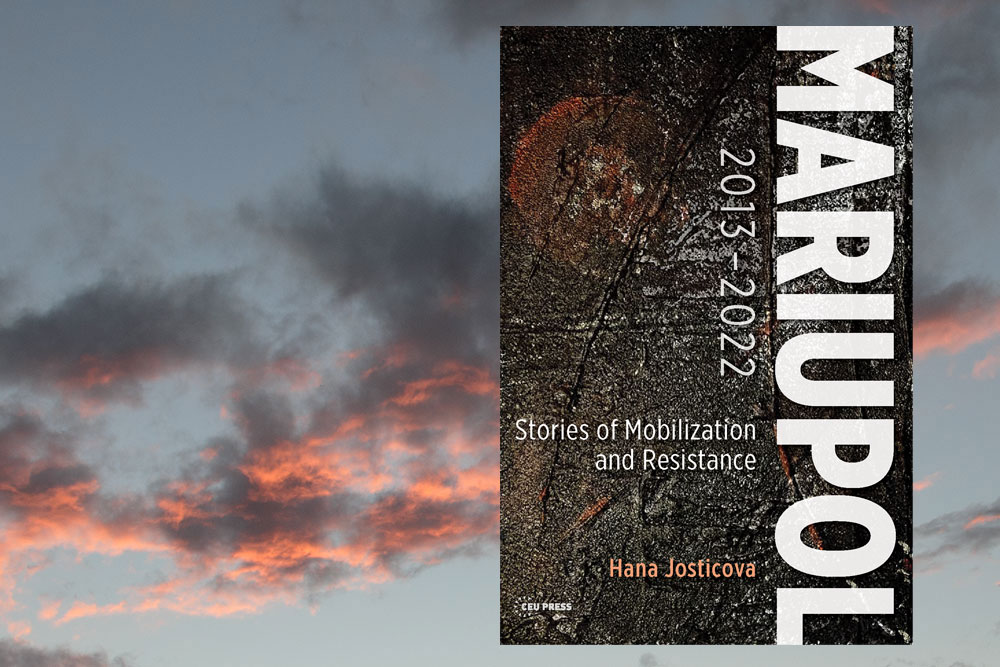
She was based in Mariupol between November 2018 and August 2021, making her one of the last academics to conduct research in Mariupol before its occupation. She looked at acts of mobilization and resistance on both sides: pro-Maidan and anti-Maidan. The book is based on an analysis of the media and on how individuals use narratives to frame their view of the world and nationality.
The analysis goes deeply, which is impressive considering that the book is rather short. The national narratives and how they were constructed are, obviously, relevant for those who are interested in Ukraine, but because she looked at language and news and economical background and opportunities and also at what people consumed for leisure in forms of movies and TV shows, I think the conclusions can be considered fascinating for a wide range of readers.
I will share a few quotes from the book:
– … fuelled the fears by employing these “Great Patriotic War”-themed myths, resulting in eastern Ukrainians fearing “Nazis” and “fascists” without physically meeting any
– from the March 1 [2014] protest, groups of suspicious “foreigners with a Russian accent and watches set forward an hour” increased their presence in the city
– Ultimately, the reason behind this agitation was to make sure the presidential elections set for later in the month would not take place in the Donetsk and Luhansk regions, in order to make the elections, as a whole, illegitimate. This was one of the key goals of the D/LNR in this period.
…
DNR groups circled all polling stations one after another, harassing voters, tearing down posters, collecting information about voters from stolen voters’ list, and disrupting and dispersing election committees
Mariupol 2013-2022 by Hana Josticova
Details about the picture: –
My rating: 5/5 Stars
Would I recommend it: yes
Published by: Central European University Press
Year it was published: 2024
Format: e-book
Genre(s): History & Politics
Pages: 232
About the author: Hana Josticova is a political ethnographer, currently working as a Research Associate at Central and Eastern European Studies (CEES), University of Glasgow. Her research is centred around the origins of social mobilisation in the context of protests, rebellion and war in the Donbas, Ukraine, about which Hana wrote her doctoral thesis. Hana is particularly interested in researching individual mobilisation in high-risk environments, and its underlying social, cultural and political factors. Over the past six years, she has been conducting extensive ethnographic field research in eastern Ukraine, among the conflict’s witnesses and perpetrators from both sides of the contention.
As part of her role at Glasgow, Josticova has conducted unique ethnographic research among foreign combatants from more than ten countries to grasp their motivations to fight for Ukraine since 2014. This role has further expanded her expertise in social mobilisation in Ukraine. So far, Hana has utilised findings from her ethnographic research in two publications: a book on the mobilisation in Mariupol between 2013 and 2022, and a co-authored article about the history and motivations of Belarusian volunteers to join combat on the side of Ukraine since the onset of the Donbas war.
Between April and October 2022 Hana volunteered in Ukraine to facilitate and aid humanitarian activities, including assisting in civilian evacuations, and to interpret for an international team of volunteers. Since the start of the full-scale invasion, she has been raising funds for civilians affected by the war, mainly from Mariupol and her research locations in the Donbas that are now under occupation of Russia and its proxies.
Website & Social Media Links: –
Thank you for engaging with my work and for your insightful comments. I am very pleased that you found my work both informative and enjoyable.
All the best,
Hana
re: your first quotation I grew up in the 60s when plenty of Americans were scared of Communists, without having met any. Fear can be a powerful tool.
Kelly recently posted…The House on the Strand by Daphne du Maurier
Yes, you are right. This is what russia is counting on and they are doing well from that perspective.