
Lady Death by Lyudmila Pavlichenko
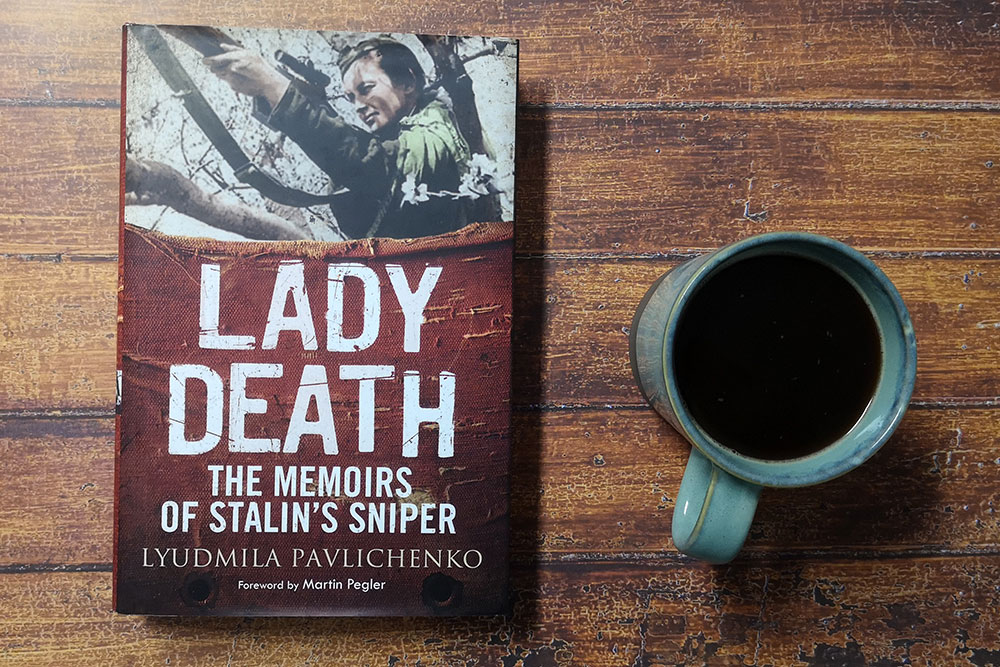
Lady Death by Lyudmila Pavlichenko – The Memoirs of Stalin’s Sniper – is a memoir of a Ukrainian-born soviet sniper. It is interesting to read and an important document of WW2. With that being said, the memoir needed strong notes to put the events in context as she made several factual mistakes on historical events, which was not surprising considering that she was used for soviet propaganda. The notes, which at times are just 1 or 2 per chapter, cover stuff like the modern name of the 1930s name of a village or a city. This is why I gave the book 3 stars. Unless someone is well aware of Ukrainian, soviet, and Romanian history, they will get a wrong view of what happened.
For example she moved from Bohuslav to Kyiv as a teenager in 1932. This was just before the effects of the collectivisation started to be felt. Bohuslav was directly affected by the famine in 1932 and 1933. I found a source which said that Bohuslav and other 10 cities in the area had a higher mortality than the region. I am going to share a short quote with what happened to a person who lived in Bohuslav, Nadiya: “…he [her father] died in that hospital. There was nothing to eat there either. My mother went to visit him, but he was not there. He was in a pit. They dug it out and threw 10 people in a pile in whatever they were wearing. In the hospital, in Bohuslav. But they never managed to take him out. We did not see him and did not bury him.”
Nadiya’s father and brothers died of starvation, only she and her mother survived.
There is no mention of this in the notes. There is no essay to explain why she was accepted in the army so quickly after Hitler invaded. She, as all russian propagandists, glosses over the 1939 to 1941 period, which was to be expected from her, but not from the publishers.
She was World War II’s best scoring sniper with 309 confirmed kills (Romanian and Germans) and a soviet propagandist who went to the White House and had a friendly relationship with Eleanor Roosevelt. She raised funds, even though, according to her words, the red army was fantastic and great and US needed soviet help because they were lost without the valiant russians. I’m not even sarcastic, but I use words she used in her memoir.
The book offers the historian a wide range of opportunities to think about. She mentioned that she was a russian despite being born in Ukraine (pages 50-51), but she describes a colleague as “Georgian by birth” (page 147). Views on nationality are interesting, especially her adoption of the imperial oppressive one instead of the one of the place of her birth. She was 16 when the famine happened and, likely, saw or knew about Ukrainians dying of hunger. She was in her early 20s, at university, when the purges started and most Ukrainian intellectuals were killer or imprisoned. Choosing the identity of the oppressor is fascinating in this case. There are many other things to consider, her experience as a woman in the “egalitarian” soviet system and her experience as a woman travelling to US for example. It is an important primary sources and I am glad I bought the book. That being said, the lack of relevant notes is unforgivable.
Lady Death by Lyudmila Pavlichenko
Details about the picture: –
My rating: 3/5 Stars
Would I recommend it: yes
Published by: Greenhill Books
Year it was published: 2018
Format: Hardcover
Genre(s): Memoir
Pages: 272
About the author: Lyudmila Mikhailovna Pavlichenko was born in Bila Tserkva, Ukraine in 1916. She was a soviet sniper in the Red Army during World War II. She is credited with killing 309 enemy combatants. She served in the Red Army during the siege of Odesa and the siege of Sevastopol, during the early stages of the fighting on the Eastern Front.
Website & Social Media Links: –
I’m not really surprised, but I don’t think of snipers as being women. But I guess why not?
Kelly recently posted…Instagram photos #44
She was the best sniper. She was also a propaganda tool in the 1940s and even in the 2010s, considering this book was published in russia in 2015.